
What Does Globalization Do to Art?
Noble Dust 2017-08-16
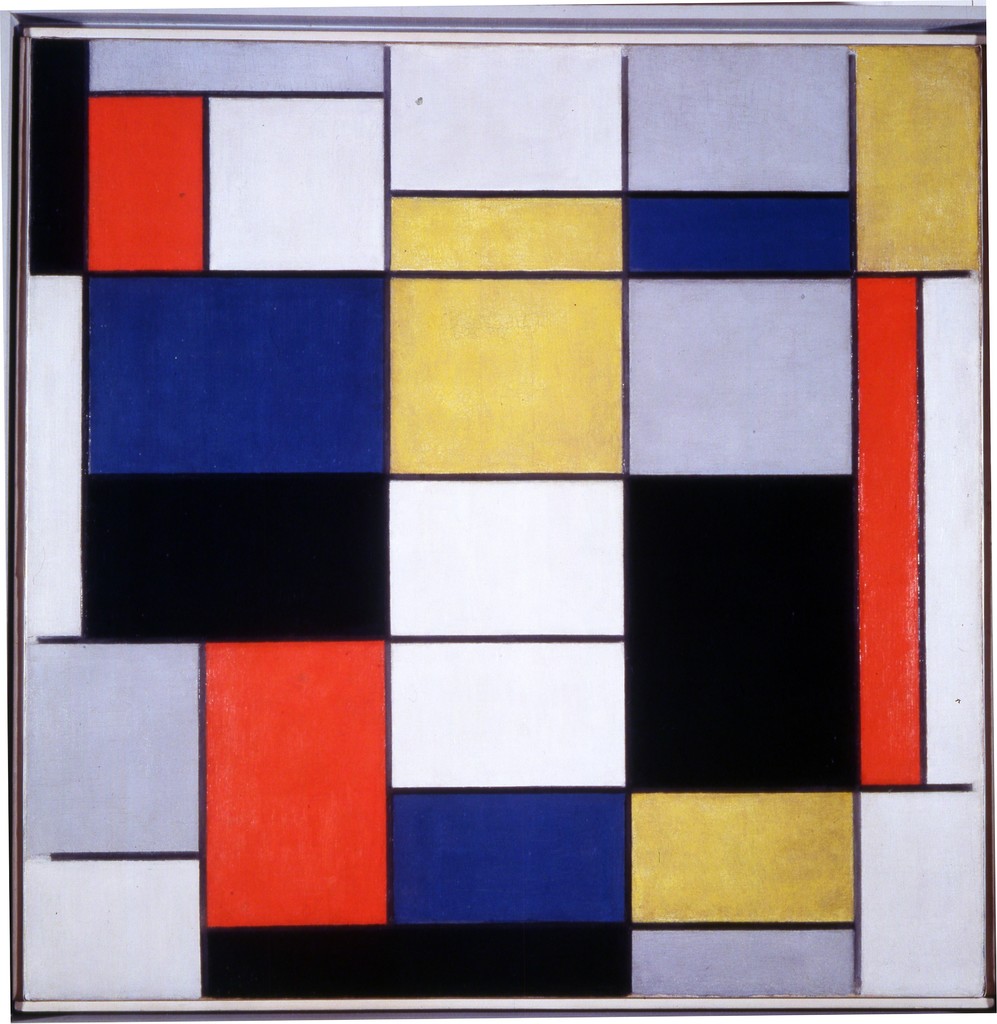
"Experience was my only teacher; I knew little of the modern art movement. When I first saw the works of the Impressionists, van Gogh, van Dongen, and Fauves, I admired it. But I had to seek the true way alone." - Piet Mondrian
Before the internet age, art was, in a sense, rare. It was rare in the sense that you had to travel to an art museum or a concert hall to experience it. It was possible to be a fan of music, or even a composer or performer yourself, and only get the chance to see your favorite orchestral pieces performed maybe a few times in your life. And to know that that piece was one of your favorites, you had to have gone to see it without knowing whether you'd like it, and you also had to be familiar with enough other material to compare and to understand what you liked.
Artists, philosophers, and authors and the like would make pilgrimages of sorts, often to Italy and other destinations, to experience the art in the only way possible: in the flesh. These journeys were often transformational; Rainer Maria Rilke and Nikolai Berdyaev both recount their life-changing experiences making just such a pilgrimage.
Today, we can google Beethoven's 9th, the Sistine Chapel, and the Mona lisa. We can illegally download movies and music (and even ebooks??) All art (along with the rest of the entire world) is at our fingertips; it's brought before us and laid at our feet, as if we were kings and queens.
What does this do to our experience of art? Mondrian had nothing but his will, his drive to create, and his experience. Once he saw the masters, he was moved, but felt equally assured that he needed to "seek the true way alone". Today, the artist, of whatever medium, has a harder time not being over-inundated with the masters, as well as the mediocre dilettantes; to "seek the true way alone" becomes increasingly difficult, and demands more and more isolation from the artist, in order to achieve this singular, authentic path. What toll does this take on the artist, and how their art is perceived and collectively valued or de-valued? What relation does the ubiquity of art in the modern world have with it's perceived value? Does great art have a real value underneath the socially constructed one, or has "great" art literally become worthless in a globalized world?
Before the internet age, art was, in a sense, rare. It was rare in the sense that you had to travel to an art museum or a concert hall to experience it. It was possible to be a fan of music, or even a composer or performer yourself, and only get the chance to see your favorite orchestral pieces performed maybe a few times in your life. And to know that that piece was one of your favorites, you had to have gone to see it without knowing whether you'd like it, and you also had to be familiar with enough other material to compare and to understand what you liked.
Artists, philosophers, and authors and the like would make pilgrimages of sorts, often to Italy and other destinations, to experience the art in the only way possible: in the flesh. These journeys were often transformational; Rainer Maria Rilke and Nikolai Berdyaev both recount their life-changing experiences making just such a pilgrimage.
Today, we can google Beethoven's 9th, the Sistine Chapel, and the Mona lisa. We can illegally download movies and music (and even ebooks??) All art (along with the rest of the entire world) is at our fingertips; it's brought before us and laid at our feet, as if we were kings and queens.
What does this do to our experience of art? Mondrian had nothing but his will, his drive to create, and his experience. Once he saw the masters, he was moved, but felt equally assured that he needed to "seek the true way alone". Today, the artist, of whatever medium, has a harder time not being over-inundated with the masters, as well as the mediocre dilettantes; to "seek the true way alone" becomes increasingly difficult, and demands more and more isolation from the artist, in order to achieve this singular, authentic path. What toll does this take on the artist, and how their art is perceived and collectively valued or de-valued? What relation does the ubiquity of art in the modern world have with it's perceived value? Does great art have a real value underneath the socially constructed one, or has "great" art literally become worthless in a globalized world?
Comments (79)
It looks like you're missing the forest for the trees here, with regards to the questions I'm asking. I'm relating the state of the experience of art pre-modern/pre-internet age, with what the experience is like now. Care to comment on the questions I asked?
Sure, can you enumerate further? I gave a few specific examples from personal accounts of people from those times. Maybe you can offer counter examples?
Right, so that's the difference between "folk" art and "high" art. Maybe it's an unfortunate distinction, but my OP here is essentially about high art; all of the artworks and people I mentioned were not folk artists or artworks.
Socially, they exist in two different worlds. But they absolutely influence one another. I'm still not sure how this relates to the questions I'm asking in the OP.
So, do you think the experience of art has changed in the modern age, or no?
I disagree; the lines are more blurred but only because there's so much more art that exists in the middle somewhere. But unapproachable contemporary classical music still exists, and so does Miley Cyrus. Maybe that's one of the hallmarks of our age, that we can have a band like Son Lux that appropriates the best of both worlds.
Quoting ?????????????
Right. I appreciate the additional differences you brought up here, but the main thrust of my thread is very different; I'm not too interested in the differences you brought up just now. I've spent plenty of time thinking about them, as I'm a musical artist who happens to straddle that line between "folk" and "art" music that you brought up. The idea of the OP started with the Mondrian quote; it made me remember that trips to museums and concert halls were much more special occasions than they are now, due to the ubiquity of art in the modern age. I was imagining what life must have been like without the internet or TV or records or whatever. It must have been a more visceral world, in which art was experienced more closely, and in which the overwhelming inundation of technology didn't mar our experience of art.
Can you back this up?
Quoting ?????????????
Atonality, the evolution of the whole tone scale, on the one hand, and the focus of the tonic and using only chords that relate to the tonic key, on the other.
Quoting ?????????????
It doesn't need to because it describes a general, traceable trend.
Quoting ?????????????
What does that mean? So, if technology mars the experience for most, then what exactly are you saying here?
Quoting ?????????????
That's certainly true. But I'm talking more about the actual experiences of the artists themselves, which was more or less implicit in the OP. Maybe that wasn't clear.
How do you know that?
Quoting ?????????????
How are you a person "irrespective of social class"?
Quoting ?????????????
I didn't mean that; I was referring to "unapproachable contemporary classical", since that's what you asked about, and I assumed we both understood that to mean atonal music, as in the example I gave. Did you listen to the examples I posted? And why wouldn't atonality be necessary for the distinction?
Quoting ?????????????
So it doesn't mar the experience for most? I'm confused.
Quoting ?????????????
You're still not even addressing what I want to talk about in this thread. Consider this: arguably the genesis of post-modern art, the true artistic "renegade" was Duchamp. His "Ready-Made's" were postcards anyone could buy. All you needed to do to make the Mona Lisa was buy a Mona Lisa postcard, and draw the famous mustache on yourself. So, already, in the first half of the 20th century, the concept of mass duplication is being introduced.
But I'm arguing that the social and psychological pressures of a globalized world do affect our ability to be creative.
Quoting Rich
The art world is still run by old money. Everyone can share their art, but a lot of it sucks. Which is worse, a democratized internet of art, mired with a lot of mediocre art, or a gate-keeping artistic intelligensia?
There are always pressures, no matter what. One can minimize pressures as best they can and get on with their art. Pressures to avoid may be to please, to make money, to emulate, to do better, etc.
Quoting Noble Dust
Art is not to please others but to express oneself. Express and if there is something interesting to share, then share. If one is able to create just one new thought through expression then that is quite a bit. Sometimes we ask too much of ourselves in one lifetime.
True; wise words.
Quoting Rich
I disagree; it's natural to want to share art. The audience is something like 50% of the work, in my estimation. Artists like myself who are or are pursuing art as a full-time vocation need the same sort of validation that their work is meaningful as anyone else in any other field.
So you don't think the ubiquity of art in the internet age changes anything about our consumption and experience of art?
Quoting ?????????????
Sorry, you're right, it does.
If you've only seen a Monet on the internet, you haven't experienced Monet. Doesn't matter how good your sound system is, if you've only heard jazz on youtube, you don't know what you're missing.
I agree.
Did you read the OP?
:s What is with this "I won't be responding" thing these days? Is Thanatos/Harris really having that negative of an effect here?
No need to talk smack about anybody.
Prior to the internet there were libraries and recorded music available in listening rooms. I remember sitting in a room filled with thousands of volumes of art books it was fantastic. I don't think the internet's rendition of fine art have reached the quality of a well printed art book.
The internet has made seeing art and listening to great music vastly easier. It has given everyone the ability to view all kinds of art works, without spending a fortune, or leaving the house.
All this is limited,and with the exception of the literary arts, art as represented in mass reproduction in books, on the TV or other medium is not the same as 'the real thing'. There is literally nothing like standing in front of Guernica's encompassing massiveness.
No problem sharing if one wishes (I don't feel the urge), but then do you try to please? If you need validation for your art, I am afraid all may be lost. It is no longer yours, it becomes theirs. Pressure?
Right, I remember the one at the University that my dad worked at. It seemed awesome. Libraries for literature have been around forever, which is great, but I think my points about live music (in Beethoven's day, for instance), and fine arts still stand. Regardless of the specifics, which is what people seem to be critiquing here, the general sense I was getting at is that we couldn't google fine artworks and download every song ever registered with a recording rights company until very recently. This is actually a neutral development, I think; quantity of art does not equal quality. I guess no one else here finds that idea significant, or at least worth contemplating?...
I wonder if it's a generational difference? Maybe older generations actually find the ease of access to be great (vs. the old limited access) and feel grateful, whereas the younger generation like myself feel overwhelmed because we were brought up in this world of instant access?
Quoting Cavacava
I remember hating Pullock until I sat in front of Autumn Rhythm for half an hour.
Everyone needs to feel like their work matters in some way. Someone endeavoring to become a full time artist wants to feel like their work matters, and that manifests itself in an audience that thinks the work matters. But yes, it's a slippery slope and can be dangerous for your mental health as an artist.
Quoting Rich
But this is exactly what happens regardless of your mindset as an artist. Art exists in the relationship between the artist, the work, and the audience. Even if that audience is only you.
Is this is your experience?
Do you disagree?
I don't think so, to me it seems more like you are attacking the ease with which people can view, listen or know about art-- that there is so little work, commitment or sacrifice needed to look or hear many works of art these days.
As such, I don't think your argument has much to do with quality or "high vs low art," unless you are going to make some argument that only art people could rarely access on special trips to the museums or concert hall was of greater quality than anything someone might see or hear somewhere else.
Do you disagree with the statement you quoted?
What I'm trying to point out is the quality of the experience of art in the internet age, vs. past ages. That was pretty explicit in my OP.
If you do feel that your experience is consistently lackluster it may be due to other causes. Have you considered this?
Now, When Bach was 20 and just starting out, (1705) he walked 500 miles from Arnstadt to Lubeck and back to hear the 68 year old Dietrich Buxtehude play the organ. Buxtehude was well known among musicians, and they could read the scores, IF they could get ahold of them--which they might not. Once Bach got to Lubeck he decided to stay and soak up as much Buxtehude as he could (much to the annoyance of his employers in Arnstadt.) That's closer to pre-modern.
Here's a sample of Buxtehude, just in case you haven't heard his music.
I took your question as to whether it was my experience to be sarcastic, since none of us were alive in the time period I was referring to. I assumed the sarcasm meant you must disagree with the concept, and since I don't appreciate that sort of sarcasm, I asked if you disagreed. What exactly are you trying to point out here? Can you be more clear?
Sure. The quote from Mondrian does suggest that he was painting and developing his style before he was introduced to some of his main contemporaries. Maybe that's not entirely accurate? When I read the quote, it was a jumping off point that got me thinking about the subject of this thread.
Quoting Bitter Crank
This is exactly the sort of idea I'm getting at here. Maybe yours is a better example. I think it's fascinating to read about these accounts and then compare it to our own experience of music; for instance, the fact that you threw in a simple youtube link at the end, as we all often do in discussions about art.
Are you suggesting "true" art (which you say is still very difficult to create) would be art that is less immersed in the artists culture? And I was never arguing that there was a time where artists weren't immersed in their own cultural milieu or something like that.
One thing that makes art more difficult these days is the investment habits of the 1%. Art sales have become a commodity speculation market. It has no affect on dead artists, of course, but warm, live artists can't avoid the cold hand of commerce. What dealers and auction houses (like Christies) are most concerned about is value. Specialists in the trading and gallery businesses do concern themselves with the quality of the art itself, but the businesses in which they work look at art the same way that investors look at stock, tons of copper, freezers of pork bellies, or boatloads of raw tuna. Buyers are buying art for more than just monetary reasons, certainly. many wealthy buyer will really relate to the works they buy. But some people are going to buy a work because they think it will appreciate steadily over the next 10 years.
(I have nothing to do with art sales, I just read about it in books written by usually appalled authors.)
The notion that "ubiquity" degrades appreciation is curious. I would think that abundance generally enhances or widens sensibilities.
I think it is wonderful that I can access music, film, text, art, politics, news, porn, etc. on this remarkable system. No doubt, live music, live art, and real painted canvas beats the quality of what I see on the screen. But being able to call up a particular work and examine it beats hiking over to the library and hunting for a book with the picture in it. It beats having to take trips around the country to see real art hanging on museum walls. It beats spending $25 to $85 to hear a first rate orchestra playing 2 pieces by Beethoven and 1 by Sibelius.
Art is also information, and even if the aural fidelity is moderately good, even if the pixels per square inch are far less than the real thing, well... tough. Most of the information still comes through.
This is my audience, and all I care about is my experience as I continue to create and learn. The search for validation always pollutes the artistic experience.
Ok, but do you disagree that in general, people want their work to matter? Is it wrong for a professional artist to want their work to matter?
You keep replacing "work matters" with "please others". They aren't the same. Again, I'm wondering, in general, do you think people want their work to matter? What I'm talking about is vocational fulfillement, if you will.
I spent my whole career doing this. Basically it is figuring v out what people want and v giving it to them - in my case confirming their views. It is an interesting skill, but nothing to do with artistic expression. More psychological in nature. Can't please everyone though, but some people try awfully hard.
Ok, no worries, sorry to misinterpret.
Quoting praxis
Well, I work in retail, and we have to play music in the shop for 8 hours every day, 5 days a week. My boss yells at me if i start the day off without putting anything on (because i just want some damn silence to sit with my thoughts and my coffee for awhile). But I'm a musical artist, and I hardly have the energy to go home and work on music after work because I'm already over-inundated with it. I know I'm not the only one, especially in the major city that I live in, filled with other musicians who are literally working themselves to death trying to make a living as a musician.
In practice, they become equivalent. It matters to someone if they like it, and you have to figure out what they like and please them. That's what salesmanship is all about.
I spoke to fairly successful artist last week as he explained to me how he chooses his latest color palette based upon what is in vogue. He knows how to sell.
Using consumer polls, sales and marketing information, various studies, and their own made- to-order-paintings", Kormar and Melamid set out to find what it is that various populations around the world really like. Most people like landscapes quite a bit, but whether children or animals -- and how many -- should be in the portrait varies somewhat. The amount of blue, green, red, yellow, etc. that people want varies too. Most people don't especially like a lot of orange in their above-the-couch art, and most people don't like abstract art. So, if you are painting orange abstracts, it is not surprising that people are recoiling in horror.
It's a fun read.
Liked a lot
Not liked much
Hmmm, it could be too simplistic, but wouldn't the converse assumption also be too simplistic? Admittedly, we're making broad strokes here, and we're both giving examples, and I acknowledge it's a bit vague, but I'd say your examples are about the same. That's just an observation.
Quoting ?????????????
I can't watch the videos as I'm at work, but the salient point here I think is that the technological means are just a neutral factor, and they always have been, back to the printing press, etc. To bring 's point into it, art is fundamentally an expression of the inner life of the person; it has a historically mystical character. The tools available for art have always remained tools, but the bell-curve-increasing complexity of tech, combined with a world view that sees tech as inherently positive rather than neutral, is, I think, what leads to the ubiquity of art being a detriment to art appreciation. Hope that makes sense.
Quoting ?????????????
I agree.
Quoting ?????????????
I'm not familiar.
He also said "Art has shown that universal expression can only be created by a real equation of the universal and the individual." :P
http://theoria.art-zoo.com/plastic-art-and-pure-plastic-art-mondrian/
Quoting Noble Dust
It's just work. That also connects to what I'm trying to communicate to . It's possible to make great work, it just takes work. And you can't control how the audience receives your art, I made an entire thread about that too. That's why focusing on the work in front of you is paramount, and that's why feeling that your work matters in a larger way doesn't equal giving the audience what they expected, or delivering it to them as you intended.
Quoting Bitter Crank
Yes, it's a racket.
Well, they're certainly connected, but how do they become equivalent? What line of work made this your life's work btw? (edit: did you mean sales?)
With regards to art, Duchamp ushered in a whole age of art that didn't particularly please audiences. I think this revealed something pretty telling; I think the relationship is more complex than you're suggesting. How art functions in society hasn't remained a constant; I'm sure everyone here knows their art history.
Once you begin mixing art, with audience, with money, it becomes something else. Some mashing of lots of things. I keep my art simple. I create and I learn. For me it is the same with all of my pursuits. I don't do it for others, I do it for myself.
If I want to make money by pleasing others, that is what I do. At this point, I am no longer doing that. Even with Tai Chi, I only teach it for free. No pollution.
*Takes a look at his computer wallpaper* :
Rather than catering to the concepts of beauty or art that a society may have, an artist could create new concepts, in affect changing, or rather adding, new sources of artistic value. As I see it that's what this topic is about, but rather than technology, abundance, or globalization being the irritant for the aspiring artist, it's simply that all the low lying fruit has been picked, so to speak. Major movements in art like realism, impressionism, abstract art, etc., to speak only of painting, have all been done, so it's more difficult to be original or to create new concepts. But then maybe it isn't actually more difficult than it was in days gone by. That might only be our perception.
Andy Warhol's 200 One Dollar Bills sold at Sotheby's in 2009 for $43.8 million.
I agree to an extent, but again, I think it's even more complex than what you're saying. A large part of why there is such a large and ever-increasing proliferation of new movements and styles and genres (just think of the endless subgenres in music) is because of technology, and not only technology, but it's relation to consumerism and a capitalistic, globalized economy. And this is exactly what prevents a new movement to really take hold. Art becomes more and more disposable the more these socio-economic factors (driven largely by the tech industry) put pressure on art industries. Like I said earlier, the function of art in society is always in flux, and an increasing technocratic society doesn't have much room for art.
And as I mentioned earlier, I believe the increased granularity of our sensibilities leads to greater appreciation. Range is not that same as quantity. MacDonald's is an expression of increased efficiency, predicability, and caters to base impulses because it's motivated by the singular goal of creating capital. But there's no reason I can see that McDonaldization constrains art or new movements in art.
What I was saying is that the socio-economic pressure on art industries changes how the value of art is perceived, which means it doesn't play the same role in society that it used to. After the World Wars, for instance, there was this massive, sort of tragic collective sigh which manifested in post-modern art, atonal, music, etc.
Quoting praxis
It might lead to greater appreciation in the sense of a more nuanced appreciation, but it seems that most people still place high importance on whatever first pieces of music or artworks first got them excited about a given medium. Another consequence of that granularity is that it gets increasingly harder to be impressed by a given artwork the more you know about the medium, genre, etc. Music criticism is a perfect example of that. The joy of discovery is hard to maintain.
This is awfully ambiguous, and that's fine if you chose not to elaborate.
Quoting Noble Dust
We're limited to some degree by our predispositions, sure.
Quoting Noble Dust
I strongly disagree. In personal experience, I've done a fair amount of plein air painting and know a lot about the medium and particular challenges of the genre. Nevertheless a California impressionist masterpiece can take my breath away, and I think that's particularly the case because I can more fully recognize the mastery. If a layman found a California impressionist painting in a garage sale they may well not think it very good.
I guess what i mean is that as your tastes refine, you become pickier. For myself, it's harder and harder to enjoy generic indie bands that have a nice "sound", the more I explore my own musical voice, and the more I experiment and listen to more experimental music. So maybe we don't disagree there; I agree with your above post.
I have to agree with Rich and say that art is about self-expression. I write, for example, in order to know what I think, and paint in order to know what I see. It is a way of amplifying, cultivating and developing experience; it is a discipline and the artist is a disciple. I don't believe the primordial relationship of the artist to their work has really changed through history. (This is not to deny that forms of art are culturally mediated and evolve along with societies). The problem is that if one wants to pursue an art full-time you need to be able to make a living by doing it. or be prepared to endure poverty. So the problem is not a psychological need for validation by means of recognition, but a practical need for remuneration via the fact of recognition.
For instance, poetry is sometimes considered the highest of all art forms, but even the most universally acclaimed poets cannot make a living at it, because there is not a high degree of general interest in reading poetry. Anthologies of poetry are unlikely to be best-sellers. So, if your circle of admirers is necessarily small, validation will always be self-validation, insofar as it only means anything to you if you validate the validators by believing in their intelligence, wisdom and authority as validators. It becomes a cult of the like-minded, inevitably.
It's a bit too bright for computer wallpaper--too distracting. As an over-the-sofa painting against a grayish green wall, about the size of a dishwasher front turned sideways, I think it would look fine. Great art? No, definitely not. Phoebus Apollo is too close to being a cartoon. Something a little more compelling, something less literal...
It's actually Elijah, by Nicholas Roerich. He has his own museum in NYC. I visited and had the place to myself. I saw that one last, as it was on the top floor. I like the imperfection of how it's composed and how annoying the colors are.
I really have to say I continue to disagree with this. Reference my comments to you in the beauty thread. I have no problem with folks like you and Rich who make art for themselves and don't care about having an audience, but that's different than a selfish artist in search of, or in possession of, an audience. I've seen plenty of that in my short life thus far from working in various aspects of the music business. Additionally, self-expression is just one aspect to art. John Baldessari said "You have to be possessed (which you can't will)." The idea of artistic inspiration has a bad rap, but I can personally attest to the truth of Baldessari's idea, and there's really no other way to address whether some sort of unique inspiration happens than through one's own experience. Philosophically, it's pretty much untenable to assert that an outside force of inspiration exists in some artists. But this is an anonymous forum, so I'll just say it: it exists, and I'm one of those artists. I really lack the philosophical chops to try to express what i'm trying to say in any other way. I just know from experience that there's something more to art than self-expression. I don't only express myself when I make music. There's something else at work. So, briefly, the fact that this outside force of inspiration exists means that art doesn't just express the self; it's an (almost always failed) attempt at what Mondrian calls "a real equation of the individual and the universal", and what Berdyaev said is an always failed attempt of the divine aspect of man to "create new being".
As I understand it authentic (as opposed to indulgent) self-expression just is inspiration; Part of the discipline of any art form consists in learning to recognize one's self-indulgence and relinquish it, to enable inspiration to take place. I don't see any dichotomy or even inconsistency between the two notions.However I certainly don't think of it as an "outside force"; I have no idea what that could even mean.
I'm not sure, then, what you mean with that distinction, since you don't see any dichotomy. Unless I'm misunderstanding.
Quoting Janus
Fair enough, of course. Like I said, my comments on that topic exede the bounds of a philosophy forum.
Are you referring to the distinction between inauthentic (indulgent) and authentic self-expression? Regarding that I say that our works (and our lives) are all a mixture of both.
As I am, possibly, one with Bergson, I'd like art to tell me what it is out there. An artist has succeeded in his endeavor if the audience experiences some sort of discovery, a feeling of awe, or an agreement with what's being conveyed. It is perhaps a travesty to be always two clicks away from an opus or a masterpiece -- I thought art should encourage meditation or understanding of the universal.
I am always fascinated when people report this. We have all read accounts of "muses" or of the work (art, writing, music) just poring out. I wonder if you would be willing to attribute this to the "intelligence" of the subconscious (as the subconscious often behaves in very rational ways and solves problems for us without our directed attention). Of course you can always attribute it to some universal mind or intelligence but I wonder if you entertain both possibilities.
I'm kind of embarrassed that I posted that back then, but I'll give it a shot.
Quoting prothero
I'm fine with that interpretation, as long as it's not considered a dogmatic, metaphysically exclusive and exhaustive explanation. What exactly is the intelligence of the subconscious? Those waters are way too murky to automatically assume a materialistic position in which the theory that suggests the subconscious as the "answer" to the phenomenon lays all metaphysical doubts to rest. A psychological explanation could serve as an expression of the singular reality of what's happening. A mystical explanation, for instance, could also serve as an expression of that singular reality. I see no reason to assume one being primary or "more real" over the other, aside from pure assumption and personal metaphysical bias.
I've been reading about the Christian mystics, and the Kabbalah as well recently. The experiences they had sound like the creative process to me. Pretty simple, really.